
Industries
Tax advice for railway construction & track safety
Personal support for railway construction companies and rail-related service providers – from ongoing bookkeeping to the annual accounts
We advise companies in railway construction, track construction safety and rail-related services. The particular demands of this sector – especially changing work locations, project-based work and staff-intensive business models – require careful support with tax and payroll.
From ongoing bookkeeping and payroll to the annual financial statements, you get everything from a single source – with dedicated contacts who know the requirements of your industry.
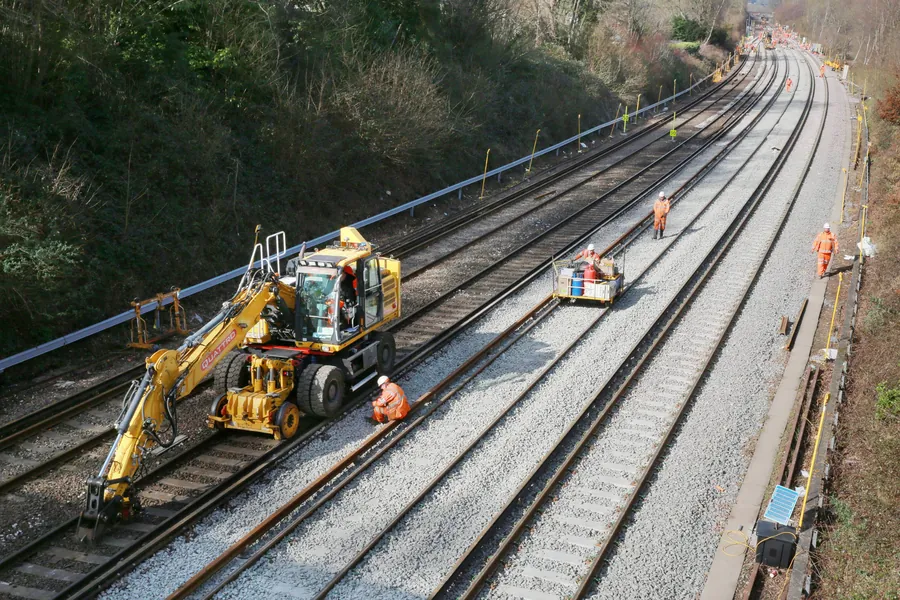
Typical issues
Typical tax issues in railway construction
Assignments at changing locations, night and weekend shifts and many employees in the field make payroll and tax advice in railway construction particularly demanding. These are the topics we deal with most often for our clients in the sector:
Travel expenses and external work
Travel costs, additional meal expenses and overnight stays of your employees at changing work locations can be reimbursed tax-free within the statutory limits.
Tax-free supplements
We make sure that supplements for night, Sunday and public holiday work are paid tax-free within the limits of Section 3b of the German Income Tax Act.
Shift work and working time accounts
We map shift models, standby duties and working time accounts correctly in payroll.
Construction payroll
We process payroll including SOKA-BAU and seasonal schemes, provided your business is covered by the collective agreements for the construction industry.
VAT on construction services
We check whether the tax liability for your track works passes to the recipient under Section 13b of the German VAT Act (reverse charge) and make sure your invoices are correct.
Construction withholding tax
Provided your services qualify as construction services, we apply for your exemption certificate under Section 48b of the German Income Tax Act and help you check subcontractors. We assess pure safety services separately.
Project-based reporting
We analyse costs and income per project or order so that you can see which assignments pay off.
Who we work for
Companies we work for
Whether a specialised safety service or a railway construction company with its own machinery: we know how your industry works and tailor bookkeeping, payroll and reporting accordingly.
 Railway constructionTrack maintenanceTrack construction safetySafety servicesMachinery servicesRail-related services
Our services
Our services for railway construction companies
We support your company on an ongoing basis, not just once a year. This way you keep track of liquidity, tax burden and profitability.
- Payroll and financial accounting with digital document workflows and punctual reporting
- Annual financial statements and business tax returns
- Tax advice on legal form, tax planning and restructuring
- Business advisory services on financing, liquidity and growth
- Support during tax audits and payroll tax audits
Frequently asked questions
Frequently asked questions
Answers to the questions railway construction companies ask us most often.
Speak to us directlyMon–Thu 8:00 am–4:30 pm, Fri 8:00 am–2:00 pm
When are supplements for night, Sunday and public holiday work tax-free?
Supplements can be tax-free within the statutory limits if they are paid in addition to the basic wage for work actually performed at the eligible times and are properly documented. The tax treatment depends on the actual working hours and on payroll.
Different limits apply: supplements are tax-free on a basic wage of up to 50 euros per hour, but exempt from social security contributions only up to 25 euros per hour. We support you with the review and implementation.
How are travel expenses settled for changing work locations?
With changing construction sites and work locations, what matters is whether there is a first place of work and which travel expenses were actually incurred. Travel costs, additional meal expenses and accommodation costs must be documented in a traceable manner.
If there is no first place of work, they can be reimbursed tax-free within the statutory framework; meal allowances generally only apply for the first three months at the same work location. We review the settlement on the basis of your operational deployment planning.
When does reverse charge apply to track construction or safety services?
This depends on whether the specific service provided qualifies as a construction service and whether the requirements are met by the client. Track construction and pure safety services may be assessed differently. We review each service and help you invoice correctly.
Can construction withholding tax apply to our services?
Construction withholding tax can be relevant for certain construction services. Whether a service falls under it must be examined on the basis of the specific order and the actual activity; pure safety services are not automatically to be treated like construction services.
A valid exemption certificate can avoid the withholding.
How can personnel and project costs be analysed per assignment?
With changing work locations, it is helpful to allocate personnel, travel and material costs to the respective projects. This makes it easier to assess post-calculation and project profitability. We help you set up suitable reports based on the available data.
What do we need to consider when using safety guards as subcontractors?
Using subcontractors is possible if they are genuinely self-employed. If, on the other hand, they work under instructions and are integrated like your own employees, they risk being classified as bogus self-employed.
Any back payments of social security contributions and wage tax are then claimed from you as the client. One warning sign, for example, is when a subcontractor works essentially only for your company, recognisable by consecutive invoice numbers that go exclusively to you.
We point out such irregularities in your records. Binding clarity is provided by a status determination procedure with the German Pension Insurance (Deutsche Rentenversicherung).
The answers provide a general overview (as of November 2026) and do not replace individual advice.